



Nov 18 2026
Digital Workspace

How IT Brought Team USA’s Winter House to Life

CDW, Cisco and Adobe partnered to give U.S. Winter Olympians and their families a home away from home in Milan.

The crowd roared when American Alysa Liu won the gold medal in women’s singles figure skating at the Milano Cortina 2026 Winter Olympics. But the celebration may have been even louder a few miles away, inside a chalet filled with Liu’s fellow athletes and their families.

“A lot of people didn’t have tickets, because it was such a popular event,” recalls Annie White, chief commercial officer for U.S. Figure Skating. “They were screaming when she won.”

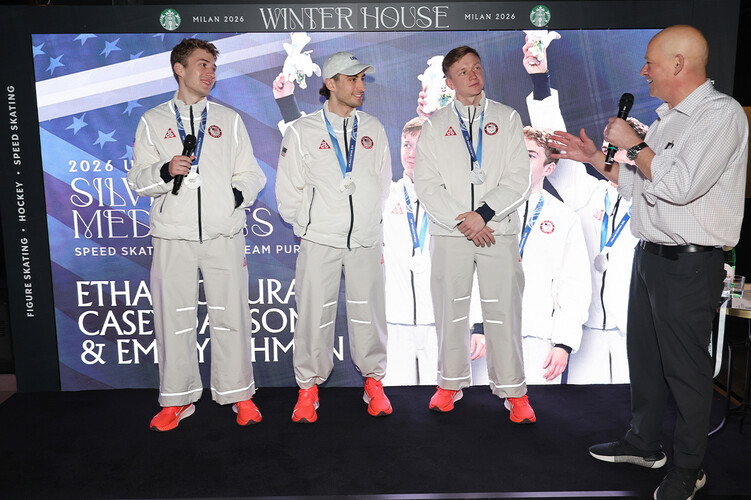
The Milan Winter House gave figure skating, speed skating and ice hockey athletes, as well as their families, a place to gather and unwind outside of the bustle of the Olympic Village and local pubs. The three sports’ governing bodies transformed a 32-room hotel into a Team USA–themed European chalet, decorating the walls with photographs and memorabilia from past Olympics. But just as important to the transformation was technology that allowed athletes to watch live events and stay in touch with supporters back home, while also letting an onsite team rapidly produce and publish Olympics content.

These efforts, White says, not only provided a connectivity hub for the sports’ governing bodies but also gave athletes and their families a “home base” where they could create Olympic memories together, off the ice.

“A lot of the athletes stay at the Olympics after their events are over, but they don’t have a place that is closed to the public where they can really just enjoy their friends and family,” she says. “The goal behind Winter House was to create a place for athletes and their families to celebrate their Games experience.”

READ MORE: An assessment from CDW helped U.S. Figure Skating chart a path toward IT modernization.


Cisco Technology To Stay Connected

Past Winter Olympics have featured a cross-sport Team USA House that served as a hospitality hub for athletes, families, sponsors and guests. But with the Milano Cortina Olympics spread out over a wide geographical area, the U.S. Olympic and Paralympic Committee opted not to create a Team USA House for the 2026 Games. So, U.S. Figure Skating, USA Hockey and U.S. Speedskating instead pooled their resources to create Winter House.

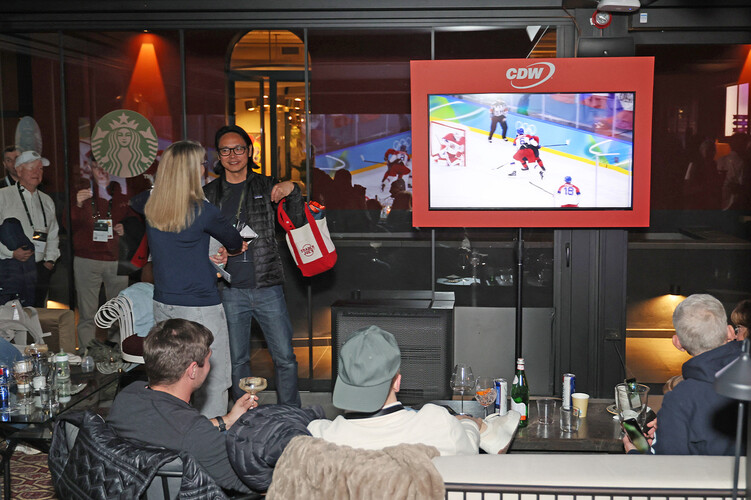
The property’s common areas, including the bar and restaurant, became a communal viewing area and gathering space. Describing the atmosphere, White says it was a “quiet” space for athletes and families, away from the public, but it came alive for some key moments during the Games: “The hockey parties after those gold medals were anything but quiet.”

Technology was key to bringing the installation to life, White says. She notes that athletes needed to be able to watch events and stay connected, while staff needed to produce and transmit a constant stream of Olympics-related content.

The quick turnaround to transform a working hotel into Winter House meant the technology had to be installed in a matter of days. Teams from CDW, Cisco and implementation partner Straight Up Technologies replaced the hotel’s existing wireless infrastructure with a high-density network capable of supporting 300 simultaneous users. Cisco Webex displays were installed throughout the property, and a private content studio was equipped with Dell workstations and Adobe creative licenses.

To prepare for the compressed timeline, the IT teams conducted a site survey and mapped out the deployment in advance. About half a dozen technicians worked on the initial installation, with additional onsite support provided throughout the Olympics to keep the technology running smoothly.
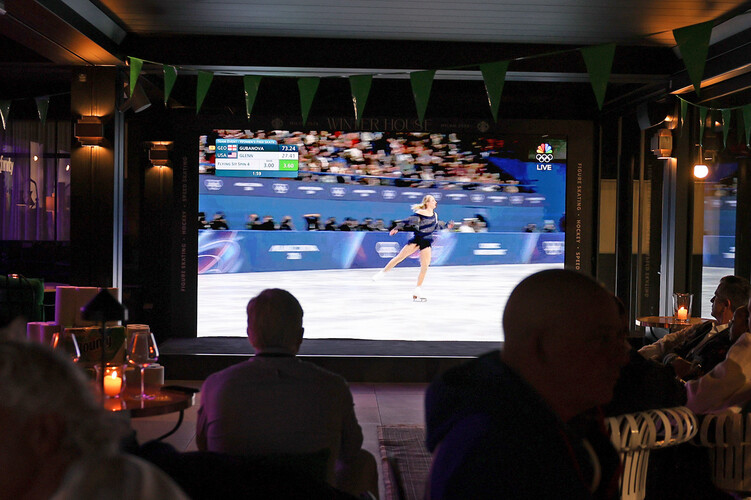

Straight Up Technologies installed about a dozen Cisco Catalyst 9130 Wi-Fi 6 access points, supported secure Wi-Fi and registration, installed multiple Webex Room Kit Pros and Desk Pros, and provided support for 14 incoming NBC video feeds. The Cisco technology not only helped athletes and their families tune in to the action when they couldn’t get inside the physical arenas, but it also helped them keep in touch with friends and family members who couldn’t make the trip to Italy. Team USA figure skaters even surprised skating clubs back in the States with remote appearances.

“It really gave the people back here at home the impression that they were sitting there with the athletes at Winter House,” says Jon Nelson, partner engineering leader at Cisco.

Demand on the Cisco network peaked at 181 simultaneous users, with a bandwidth usage of 142 megabits per second on the final night of the Olympics.

“We didn’t have any degradation during any of the high-demand periods,” Nelson notes.

LEARN MORE: See how CDW is delivering technology to support the 2028 Olympic Games.

Simplifying Content Creation With Adobe

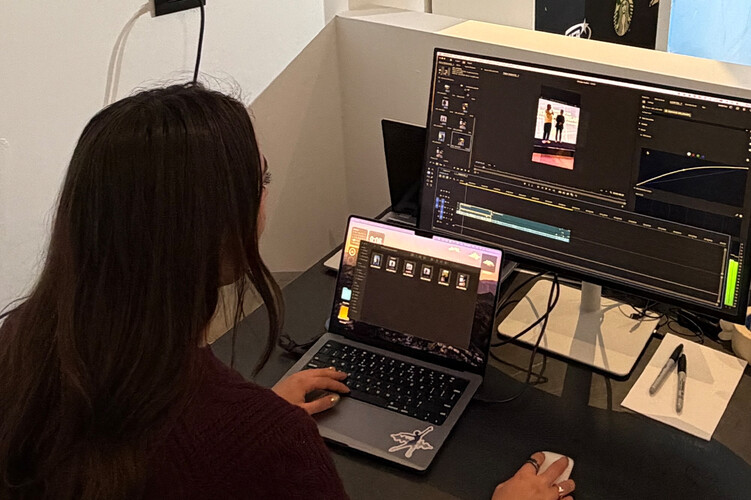
The Winter House also served as a content production hub, with Adobe providing Acrobat Studio licenses. Acrobat Studio combines Acrobat Pro’s PDF tools, AI features for document analysis, shared workspaces and Adobe Express Premium for on-brand content. With the addition of this AI-powered solution, athletes and team personnel were able to create and distribute videos, images, and impactful creative assets, turning the Winter House experiences into content that reached audiences around the world.

Adobe also provided Creative Cloud licenses to facilitate professional video production. White notes that the onsite studio let U.S. Figure Skating quickly publish videos and other assets without the delays that likely would have resulted from sending files back to teams in the U.S. “It made it a lot more seamless to be able to do everything in real time in Milan,” she says.

The studio featured two Dell workstations with 30-inch external displays, and White estimates that the content team captured more than 800 videos during the Olympics. In addition to producing content for stateside audiences, the team also quickly turned around videos and other creative assets for display during events at Winter House itself.

While the technology helped Winter House bring the Olympic experience to audiences around the world, White says the most meaningful connections were the result of the interactions between the athletes and families gathered inside. 

“Hockey moms were talking to skating parents, and then they would cheer for each other’s kids and celebrate them when they came through the Winter House,” White says. “The thing that made it special was seeing those relationships form and seeing athletes becoming friends and celebrating together.”

Photography by U.S. Figure Skating
Close

New Research from CDW Explores AI and Cybersecurity

Learn how AI is helping IT teams manage risk and improve resilience.