





Why Imagination Is Essential to Fixing Cybersecurity
Here’s a funny thing you might not expect the CEO of a cybersecurity company to say: IT doesn’t have a cybersecurity problem, it has a software quality problem.
From Easterly’s point of view, the current approach to cybersecurity relies on aftermarket companies, such as RSA, building cybersecurity bolt-ons and add-ons after software has already shipped and been implemented with organizations of all kinds.
But that goes against the best practices of cybersecurity principles, which call for security to be imagined and integrated at the inception of the software development.
“For nearly four decades, because of misaligned economic incentives, lack of any meaningful technology regulation or software liability regime, technology manufacturers have been allowed to — have actually made the rational business economic decision to — develop and deliver what is flawed, defective, insecure software,” said Easterly.
EXPLORE: Confronting the identity problem for agentic AI.
But given the eyebrow-singing headlines we’ve seen of rogue agents hacking into systems and structures without the knowledge of their creators, this aftermarket approach to cybersecurity is insufficient for the moment.
“This vulnerability acceleration moment changes a lot of how we’ve been thinking about the cybersecurity business, because if attackers can find and weaponize these flaws and defects faster than defenders can find them, confirm them, validate them, remediate them or place compensating controls around them, well, that means the balance of power may shift,” said Easterly.
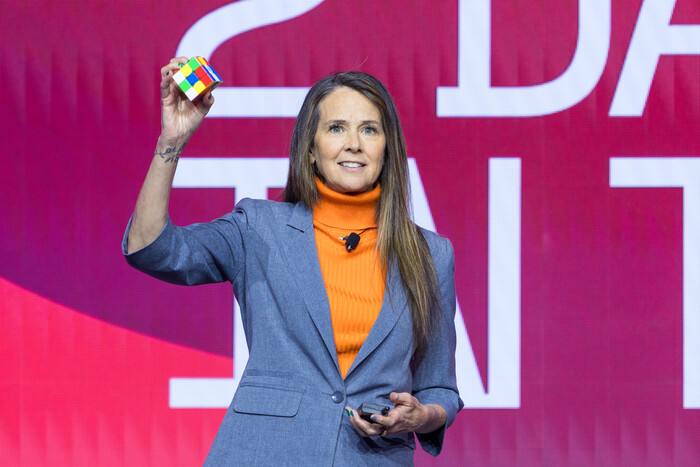
Rather than fight to preserve the cybersecurity business model and philosophy that has built the industry, Easterly is actively leveraging that imagination she honed as a child with her Rubik’s cube to imagine new solutions and approaches for this brave new cybersecurity landscape. And she’s encouraging other IT leaders to similarly use their imaginations to solve these emerging problems.
“We have to figure out how to harness the power of imagination of these scenarios without suffering a failure of imagination, because we know our adversaries out there, our adversaries are doing it,” she said. “Our adversaries right now are trying to figure out how they can use AI to turbocharge their attacks, to hold our critical infrastructure, our way of life, at risk. And that is not theoretical.”