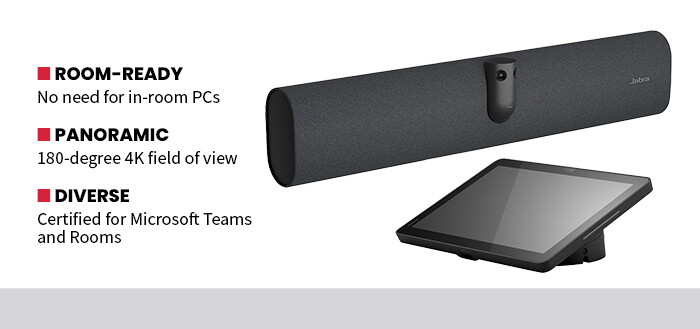






Once the video quality was set to full 4K resolution for my tests, neither the quality of the feed nor the frame rate ever dropped. And the motion remained smooth even during screen sharing and speaker transitions. Even speakers who liked to move around the room while talking remained in focus during their presentations.
Intelligent video features, including automatic framing and Jabra’s Virtual Director technology, dynamically adjusted the composition and focus as different participants spoke. The result felt more like a moderated broadcast than a static webcam feed, greatly improving engagement for remote attendees.
DISCOVER: The top 3 ways to master operational management in multicloud environments.
PanaCast 40 Delivers High-Quality Audio
For presentations or important meetings, the audio quality is as important as video. That was not a problem for the PanaCast 40 VBS, as the six-microphone beamforming array captured voices clearly from multiple seating positions without requiring participants to lean toward the device. Background noise suppression worked well in simulated open-office conditions, and full duplex audio technology prevented clipping during cross talk. All remote participants during my testing reported continuous clarity.
One of Jabra’s strongest enterprise advantages is its Android-powered appliance architecture. Because the PanaCast 40 VBS runs Android 13 and does not require a dedicated in-room PC, IT teams can reduce complexity while minimizing their potential attack surface. Eliminating separate compute devices also lowers patching requirements and reduces the number of failure points. For organizations standardizing dozens or even hundreds of meeting rooms, that kind of simple but effective architecture can make a significant difference beyond the equipment’s initial price tag.