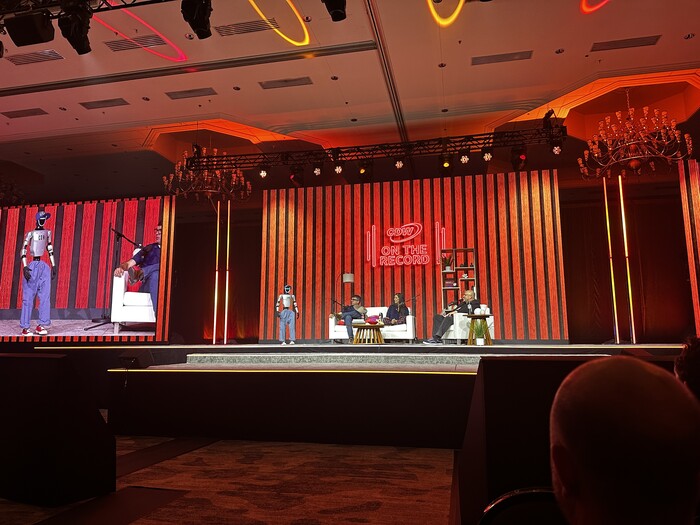






The idea that IT leaders would present themselves in such a down-to-earth manner would have seemed out of place more than five years ago. But this change in tone and style is a sign of the times. And the idea that it’s important to infuse fun, excitement or positivity into their IT management styles was one that Arndt clearly embraced more easily than Ivey, who viewed his role as an IT leader as more of an honest broker and a skeptic — especially when it comes to the AI hype cycle.
“I think it’s your responsibility to be the voice of reason and to help guide this. And if you don’t have a skeptic in the room, then guess what your job is: to be the skeptic,” said Ivey. “If you have a skeptic in the room, then it’s probably not helpful for you also to be a skeptic. But you need one. And so, go find one, bring them in the room, just so they can poke holes in this thing early on. And I think you’ll survive and build a bulletproof project if you just bring in a naysayer early.”
Arndt said she prioritizes a highly collaborative but honest and authentic approach to IT leadership. For her, having a positive relationship and effective communication with her non-IT counterparts is critical to her role as a security leader.
“Our technology organization has a phenomenal relationship with our hospital leadership, and they talk constantly,” said Arndt. “It’s something that we focus on a lot in security: speaking the language of people that we serve so they really understand what’s going on.”
Those conversations, which might seem more casual than they were in the past, are extremely valuable in Arndt’s pursuit of getting her non-IT counterparts to receive her concerns about risk management.
“Having those open conversations where you can just be yourself and feel like you’re not just trying to put on a show for your leadership … I do see that happening,” added Arndt. “They know there’s a lot of unknowns, but they’re really excited to investigate those reasonably and from a risk-balance basis.”
DISCOVER: How to optimize your organization’s infrastructure for artificial intelligence.
Linking AI With Strategic Business Imperatives
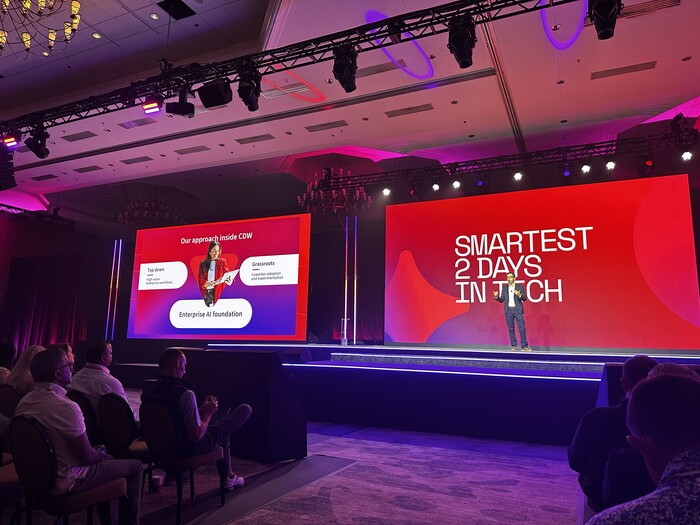
As she walked out to the main stage to welcome the more than 600 attendees at the Sheraton Dallas Hotel, CDW Chief Commercial Officer Liz Connelly acknowledged that everyone in tech has been talking a lot about AI, and that many people are eager for the next step.
“OK, we know you’ve heard a lot about AI,” said Connelly. “We won’t be spending time simply admiring the opportunities and challenges around AI. We’ll be sharing our well-informed point of view on what to prioritize, what to build and what to do next. Because the question is no longer whether AI will change business. The question is how organizations can use AI to deliver real and measurable business ambition outcomes.”
To highlight just how CDW was putting its money where its mouth is, Connelly brought out the company’s recently hired chief strategy and transformation officer, Hang Tan.
Tan, who has been tasked with advancing CDW’s AI strategy, highlighted how CDW has decided to treat itself as “Customer Zero” as it deploys and learns from its own AI implementations.