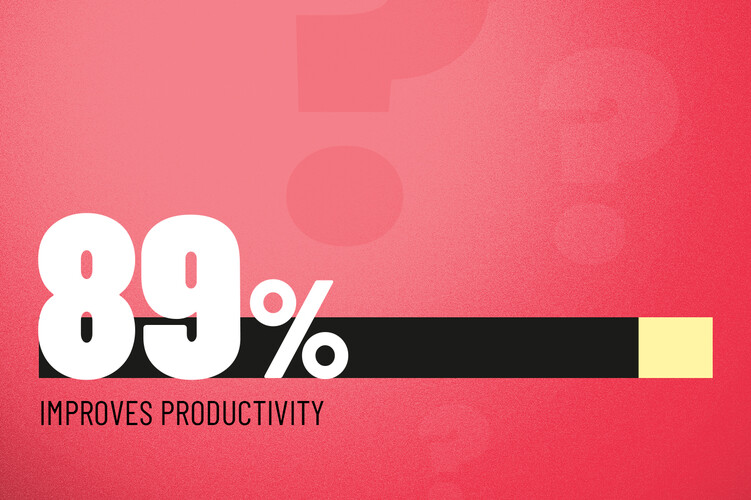






To be sure, AI is at the center of conversations around the world, not only at dinner parties but also on Uber rides and airplanes — and, perhaps most especially, on LinkedIn. Often, these conversations center on fantastical futures in which the technology has wiped out entire industries or even achieved sentience. But in the present, companies such as Michelin are rapidly experimenting with, validating, implementing and optimizing AI applications that provide concrete benefits such as improved productivity, efficiency and accuracy.
Jay Titus, vice president and general manager of workforce solutions at the University of Phoenix, says that many employers are still in “discovery mode” with the technology. But he notes that AI tools — and the ways companies use them — are evolving rapidly. “We’ve come from a point where employers were fearing AI to a point where they’re embracing it,” he says. “The question used to be, ‘What do we do about AI?’ That has shifted over the past year or two to, ‘What do we do with AI?’”
EXPLORE: How AI is transforming hybrid work for businesses.
How Michelin Arms Workers With AI
Rajagopal acknowledges that there is significant hype surrounding AI. However, she says, the technological advancements of large language models (LLMs) are “very real,” and those breakthroughs are penetrating other areas of AI, such as time series forecasting, that are unrelated to the generative tools that tend to dominate headlines.
In addition to adopting Microsoft Copilot, Michelin has created its own generative AI platform, dubbed Aurora. The platform, hosted on a mix of Azure and on-premises infrastructure, gives users secure access to LLMs such as ChatGPT and Llama, and employees can use it to make inquiries about internal processes and policies.
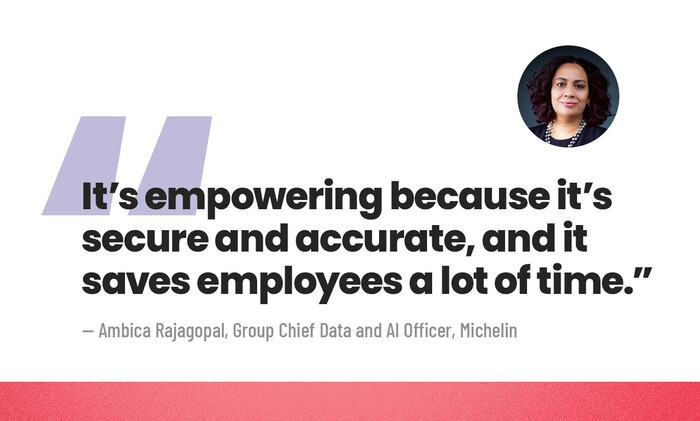
“If they have a question about how to execute a particular finance process, instead of digging through the documentation, they can just write out the question, and the answer comes back to them with specific references to our documents,” Rajagopal says. “It’s empowering because it’s secure and accurate, and it saves employees a lot of time.”