



Oct 22 2026
Cloud

How Enterprises Are Modernizing Applications for an AI-Ready Future

Cloud-native infrastructure can improve performance and access to AI features, but some workloads are best left where they are.

For most enterprise businesses, there’s a lot more to application modernization than simply migrating everything to the cloud. Some systems are too valuable to replace, some workloads aren’t worth the expense of re-engineering, and some technologies need to evolve on a different timetable.

Take Genworth Financial, for example. The Richmond, Va.-based company is taking a pragmatic approach as it modernizes its technology environment, embracing cloud-native infrastructure where it can deliver new capabilities while continuing to operate certain mature workloads in its own data centers.

However, as it built out platform functionality for CareScout, a provider of long-term care support services that Genworth acquired in 2008, it determined that a cloud-native infrastructure was the right foundation. “We’ve been pushing ourselves hard to be as technology enabled and human-delivered as possible to give customers more options through the digital experience,” says Genworth CIO Morris Taylor. “To do that, we have to be more modern in the way that we offer certain capabilities and services. And being more modern, those capabilities need to run in the cloud.”

Genworth’s approach reflects a reality facing many mature enterprises: While cloud is often a critical tool for modernization projects, that doesn’t necessarily mean abandoning everything that came before.

Click the banner below to explore the right cloud environment for your organization.


Enterprises Evaluate Infrastructure App by App

As a mature business, Genworth still operates its own data center resources for certain operational workloads. Its embrace of cloud-native infrastructure is relatively new, growing from the expansion of its digital properties over the past few years, including CareScout. Today, Genworth operates with a multicloud strategy, using Microsoft Azure and Amazon Web Services to support its cloud footprint. 

That strategy requires judgment about which workloads belong in the cloud — and which don't. 

“Some technology is just not worth the expense to modernize and force-fit into our cloud services,” Taylor explains. “We’re very intentional with our closed-block business as to what things we think are cloudworthy or cloud-valuable. A good example is our data environment. We run our data environment in our data center today. But we are investing in a more modern technology solution that will be hosted in the cloud, and we will run all of our data in the cloud eventually.” 

For growth-focused CareScout, however, Genworth has built an architecture that is cloud-based, making it quick and easy to add new services as the company expands its long-term-care service offerings. 

“Running off a cloud-hosted solution makes it easier to snap in new services,” Taylor says. “Also, from an OPEX perspective, it enables us to spin up things when we need more, and spin down things when we need less. That is a really powerful feature that helps us manage the operating expenses relative to the platform.” 

A broader change is underway in how organizations think about modernization, says Ashish Nadkarni, vice president and general manager of enterprise infrastructure at IDC. Businesses aren’t just deciding which applications should move to the cloud. Today, they’re often considering how the infrastructure supporting those applications can position them to take advantage of technologies that may not have been part of the original modernization plan. 

AI is one increasingly important consideration. 

“AI is putting a new veneer on the cloud services model,” Nadkarni says. “Not only do enterprise applications benefit from it but also some of the up-and-coming AI initiatives that businesses are considering.”  

READ MORE: How Microsoft simplifies modernization through consolidation.

Enterprises Evaluate Infrastructure App by App

That makes the choice of cloud platform about more than the immediate workload being migrated. Businesses need to consider how their cloud strategy can support the broader portfolio of applications and services over time.

Such was the case with Genworth and Microsoft 365 Copilot. Its investment team took the time to meaningfully implement the technology into its workflows.

“We’re a large Microsoft shop, so when it came time to explore AI, it made sense to use Copilot,” Taylor says. “And as an organization, we now find ourselves in this step-change moment, reimagining our processes and applying AI to them. Copilot and other solutions may be a good fit, depending on the level of sophistication and automation we’re aiming for.”

When it comes to cloud strategy, businesses need to look beyond initial use cases and consider all of their server workloads. They should evaluate cloud providers with horizontal expansion in mind and consider the whole portfolio of services that are available, including AI.

“If you are looking at the Amazon ecosystem, for example, you aren’t just looking at the first-party services offered by Amazon, but also the marketplace of all the vendors that offer services on Amazon’s cloud,” says Nadkarni. “It’s this adjacency, more than anything, that is important for these companies.”
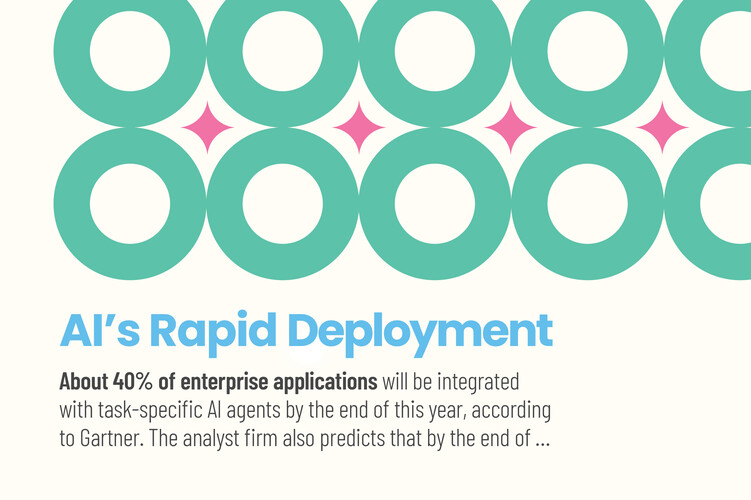
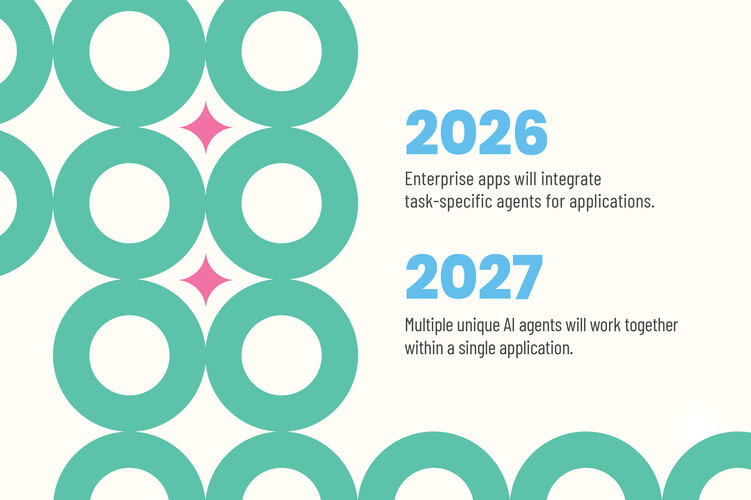
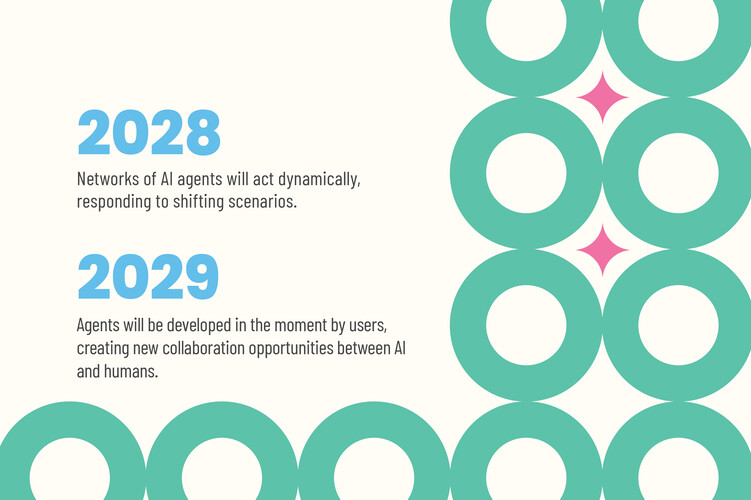
Source: Gartner, “Gartner Predicts 40% of Enterprise Apps Will Feature Task-Specific AI Agents by 2026, Up from Less Than 5% in 2025,” Sept. 5, 2025


AdvisorEngine Improves Database Performance by Updating Surrounding Infrastructure

Just as modernization doesn’t always mean a cloud migration, cloud migrations don’t always require rewriting key applications. Sometimes, the biggest gains come from modernizing everything around them. AdvisorEngine, a Raleigh, N.C.-based company that provides a digital practice management platform for independent investment advisers, took that approach with one of its most important operational systems.

“AdvisorEngine runs its critical wealth management workloads in AWS using a highly available, multiregion architecture,” explains Tim Gitchel, principal consultant for the company. “Microsoft SQL Server remains a core operational platform for us, while Amazon FSx for NetApp ONTAP provides the enterprise storage layer, supporting database performance, high availability, disaster recovery and o­perational data management.”

AdvisorEngine wanted a way to improve Microsoft SQL Server performance while minimizing operational disruptions.

Rather than rewrite the application, the company modernized the infrastructure beneath it. Amazon FSx for NetApp ONTAP allowed AdvisorEngine to process significantly more work within the same operational windows and scale more predictably.

RELATED: Find out how banks can optimize their hybrid infrastructure.

“We use Amazon FSx for NetApp ONTAP as our shared storage foundation for SQL Server Failover Cluster Instances (FCI) deployed across AWS availability zones and regions,” says Gitchel. “The platform provides the low-latency storage performance required by our transactional workloads, while NetApp supports replication to the disaster recovery environment. NetApp cloning capabilities also allow us to create efficient database copies for integrity checks and other operational processes without placing additional load on production systems.”

The result was a substantial improvement in both performance and cost efficiency — without having to rewrite any applications.

That distinction matters. By modernizing the infrastructure surrounding an established application rather than replacing the application itself, AdvisorEngine reduced implementation risk, accelerated its modernization efforts and extended the value of its existing technology investments.

“Cloud modernization does not always require replacing mature systems or rewriting core applications,” Gitchel says. “In AdvisorEngine’s case, the largest gains came from modernizing the infrastructure beneath the application. By combining self-hosted SQL Server FCI with Amazon FSx for NetApp ONTAP, we improved performance, resilience and cost efficiency while preserving the existing application architecture. That reduced risk and produced business value much faster than a full platform rewrite would have.”

Photography by Logan Whitton
Close

New Research from CDW Explores AI and Cybersecurity

Learn how AI is helping IT teams manage risk and improve resilience.