



Jul 06 2026
Digital Workspace

Companies Modernize Contact Centers With AI-Powered Cloud Solutions

How businesses are improving customer service with omnichannel communications, AI and automation

When customers frantically call on Thanksgiving with grills that won’t start, Traeger’s contact center agents have the tools and knowledge to troubleshoot quickly. Traeger’s Amazon Connect cloud-based contact center from Amazon Web Services displays the customer’s grill model, purchase history and previous service issues on the agent’s screen instantly.  

Agents can launch video streaming to see what's happening in the customer's backyard, get eyes on the ground, consult a comprehensive knowledge base and draw from their own experiences. Every agent owns a Traeger wood pellet grill or has access to one, so they know the product firsthand.

Traeger sends emails to customers in the weeks before Thanksgiving to encourage them to test their grills and make sure everything works, so if a part needs to be replaced, there will be time to ship it before the holiday, says Corey Savory, who was Traeger’s senior vice president of customer experience and service when it deployed Amazon Connect.

Most problems are maintenance related. Customers need fresh pellets or need to vacuum out ash. About a quarter of the time a part fails, and agents can diagnose the right part and ship it quickly, she says. The small percentage of customers who can’t be helped on holidays are typically those who didn’t pretest their grills when a replacement part could have been shipped days before the holiday.  

Click the banner below to freshen up your customer experience strategy.


“Thanksgiving morning is the busiest day of the year for Traeger,” Savory says. “Your angst is going through the roof because you’ve got people coming over, and you’ve got to get the turkey going. But that curve of customer urgency also applies to Father’s Day, Fourth of July, Christmas — anytime you invite people over. We’re able to save the day most the time.”  

Companies are adopting cloud-based contact center solutions to enhance customer service, while giving agents better tools to work faster and more efficiently.   

Contact Center as a Service (CCaaS) platforms support omnichannel communications that include voice, chat and text messaging, and deliver AI-powered capabilities including sentiment analysis, analytics to measure customer service performance and automated call summaries to eliminate manual note-taking.

“Agents can just focus on the problem at hand, listening to the customer and helping the customer have a great experience,” says IDC analyst Michelle Morgan.

Human-sounding, AI-powered virtual agents are gaining traction as well, handling routine inquiries so human agents can focus on complex issues, Morgan says.

GO DEEPER: Why is customer service the focus of most digital transformation projects?

How To Get Accurate Customer Satisfaction Scores

When Savory joined Traeger in September 2019, she inherited a customer service operation with no visibility into data and little control over technology.

The grill maker relied on a third-party call center partner whose antiquated technology only supported calls and emails. That provider also self-reported artificially high customer satisfaction and first-contact resolution rates. Call center agents received no formal training on Traeger’s products, had no knowledge base and no accurate troubleshooting scripts. Traeger’s own Salesforce customer resource management instance displayed customers’ addresses, but it was very difficult to find product history or previous service issues. 

“When I arrived, agents were doing their best, but they were ultimately winging it with tribal knowledge,” Savory recalls.
She wanted to take control of the technology and get accurate data, so over a weekend in January 2020, she and her team shut down customer service and deployed Amazon Connect. By Monday morning, Traeger was live on the new contact center technology.

Her team implemented Amazon Redshift for data warehousing and Amazon Quick Sight for data visualization, creating real-time dashboards that showed agent performance metrics, such as first-contact resolution, so team leaders could identify who needed coaching.

“That was the most exciting part for me,” Savory says. “I had control of my own data, my own tech stack and we could move fast.”

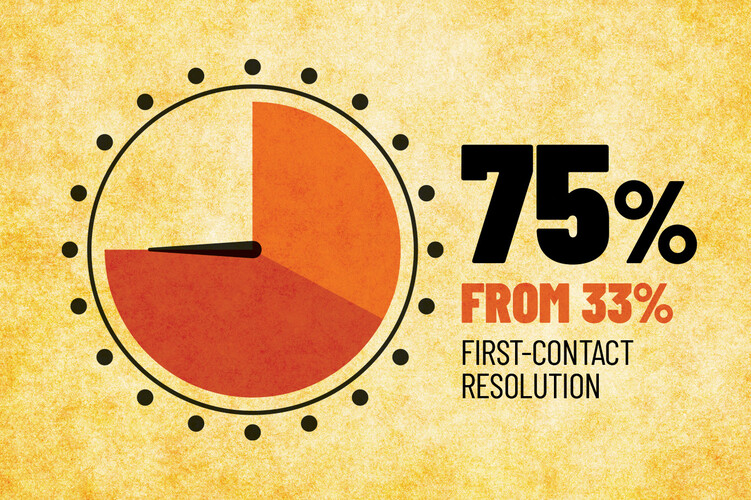
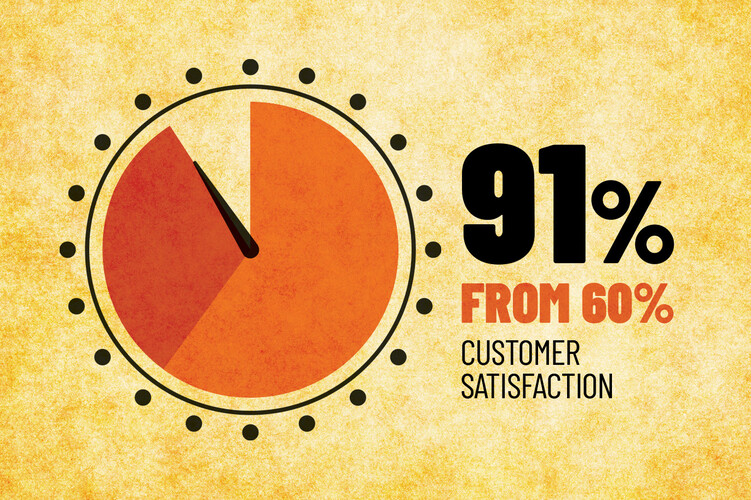
With the data in hand, Savory discovered that first-contact resolution was actually 33%, and customer satisfaction was in the 60% range — nowhere near what the vendor had been reporting.

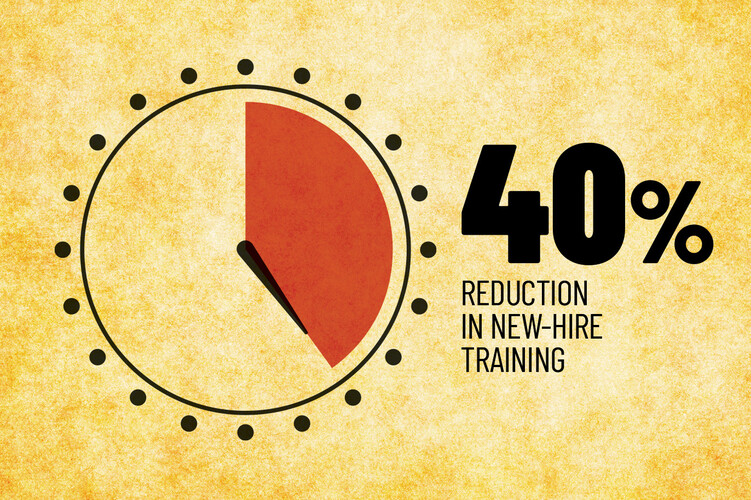
She introduced formal training, validated troubleshooting steps with Traeger’s engineers, developed a knowledge base and redesigned the Salesforce interface so agents could easily access customer history and registered products.

UP NEXT: Learn why customer experience technology is vital for hybrid work. 

Centralize Customer Interactions in Microsoft Dynamics

Intralox, a New Orleans-based manufacturer of modular plastic conveyor belts used in the food, beverage, packaging and logistics industries, has also consolidated multiple applications into a single interface to improve productivity.

Its customer service team communicates with customers via phone, email and chat. Before, agents juggled multiple windows: Microsoft Dynamics 365 for CRM, Outlook for email, Cisco for phone calls and WhatsApp, a chat application popular among its Latin American customers.

Agents used multiple monitors as they switched between applications. “You're playing the swivel chair game of opening one app for email and a completely different one for phone,” says Jordan Farley, Dynamics business lead at Intralox. “It's a lot to think about.”

About three years ago, Intralox adopted Microsoft Dynamics 365 Customer Service, integrating its different customer service apps into a single Dynamics interface. It also connected the company’s on-premises Cisco VoIP system to Dynamics for phone routing.

Corey Savory
When I arrived, agents were doing their best, but they were ultimately winging it with tribal knowledge.”

Corey Savory Former Senior Vice President of Customer Experience and Service, Traeger

Today, Intralox’s 250 agents work faster and more efficiently. Rather than force callers through an interactive voice response menu, Farley says, the company provides specific phone numbers for customers in different industries, ensuring they reach agents who are experts in their field.

When customers call, the system identifies the caller, routes them to their assigned representative whenever possible and populates the agent’s screen with account information and previous communications.

The company emphasizes first-call resolution and quality of interactions. The consolidated Dynamics software gives agents the customer information and capabilities they need to resolve issues without transfers or callbacks, including connecting with technical specialists during calls, Farley says.

“We want to avoid saying, ‘we’ll call you back,’ or ‘let me transfer you.’ We want to serve them effectively in one call,” he says.

Microsoft Power BI integrates with Dynamics for reporting, giving managers data on call volume and staffing needs, and enabling more data-driven decisions. The platform also monitors sentiment during digital interactions. A smiley face indicator shows agents whether customers on WhatsApp are happy or frustrated.

“Everything we are doing is to make sure our customers have the best possible experience, and we do it through increased productivity and improved efficiency offered by these tools,” Farley says.

READ MORE: Assess your readiness to modernize customer experience.

Making Customer Agents’ Lives Easier

Traeger — which also owns MEATER, a wireless, smart meat thermometer — built out its contact center capabilities in phases over five years. The company started with sentiment analysis to gauge customer satisfaction and automatic call transcription that made calls searchable by keyword, helping engineers identify product issues and make improvements.

The company also added live chat and video streaming, allowing agents to see customers’ grills and MEATER probes through their smartphone cameras. “Video streaming is a game changer for technical troubleshooting,” Savory says.

In 2025, Traeger rebuilt the agent user interface within Amazon Connect in just three months, consolidating multiple applications and automating workflows through a single pane of glass to improve worker efficiency. Previously, agents toggled between Amazon Connect for calls and chats and Salesforce for account information.

Now, when a customer interaction begins, the system displays an AI-generated summary of recent interactions and asks, is this an order or a technical issue? Based on the answer, the interface guides agents through the next steps.

For orders, agents see recent purchases and can resolve issues with a single click that automatically triggers back-end processes, including warehouse emails. For technical issues, the dashboard displays registered grills and MEATER devices and replacement history without requiring agents to navigate Salesforce, Savory says.  

Click the banner below for expert insights on optimizing your collaboration environment.

Agents still access the knowledge base through Zendesk, but all other workflows are consolidated within Amazon Connect.

Traeger’s agent user interface also employs AI to automate case creation and generate call summaries for customer records. This has proved valuable as the company added call centers in Costa Rica, Guatemala and Egypt, where agents are not native English speakers and note quality was inconsistent, she says.

Real-time translation lets English-speaking agents assist European customers who chat in multiple languages, including Italian, French and German. The tool translates messages in both directions, says Savory.

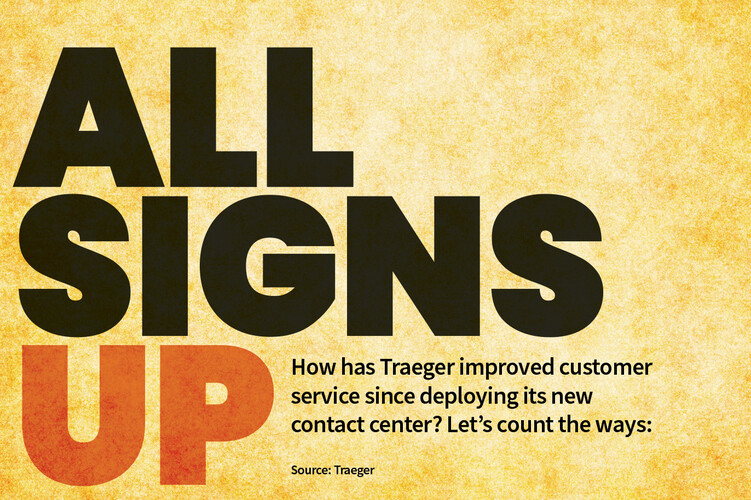
Today, Traeger operates five outsourced international contact centers with remote agents in the U.S., scaling from 200 agents in the off-season to more than 350 during peak summer months. First contact resolution has more than doubled, while customer satisfaction has improved significantly.

“One of the best things about Amazon Connect is how fast you can move,” Savory says. “We could iterate quickly and build upon our technology really fast.”

Photography by Kim Raff; Photo illustration by David Vogin
Close

New Research from CDW on Workplace Friction

Learn how IT leaders are working to build a frictionless enterprise.