



Apr 16 2026
Artificial Intelligence

Cloud Strategy Powers AI and Business Intelligence

Small organizations use cloud-based data management and tools to drive smarter decisions and boost productivity.

New York-based real estate firm Fisher Brothers is well on its way to leveraging AI and data analytics to provide insights, improve decision-making and automate management tasks. But its path wasn’t easy.  

In 2024, E.M. Hinchey Jr., vice president and head of technology, focused on data readiness first. He hired a third party for data classification and optimization, and employed CDW to build a Microsoft Azure data lake to serve as a central repository for disparate data from the company’s 176 applications, which included everything from an on-premises enterprise resource planning system to Software as a Service business apps.  

The data classification project stalled eight months after it began because “we tried to boil the ocean,” Hinchey recalls. “It was too much.” He also faced some staff resistance because they didn’t see the project’s value. His new strategy: Instead of preparing all the data first, he pivoted to focus on high-priority business needs and tackled data readiness department by department to build early wins and secure buy-in. 

Click the banner to sign up for our newsletter and receive more business IT insights.


Now, Fisher Brothers’ business leaders get Microsoft Power BI reports on loans, deal flow and treasury operations. They can ask questions about loans and real estate cleaning operations using Fisher GPT, the company’s private generative AI chatbot on Azure. Next up: an agentic AI application that automates site cleaning operations, from scheduling cleaning services tenant notifications.  

“It’s technology that’s enabling us to operate more efficiently, and to complete transactions faster and more accurately,” he says.

READ MORE: Learn how NVIDIA’s CEO, Jensen Huang, envisions the future of AI.

Benefits of Cloud for SMBs’ AI Projects

Organizations are increasingly adopting public cloud services such as Azure, Amazon Web Services (AWS) and Google Cloud Platform to centralize and prepare their disparate data, creating a foundation that enables both analytics and AI applications, says IDC analyst Ashish Nadkarni.  

“With a suitable data strategy, they can leverage it for both the analytics side, which is more traditional, and the generative AI side, which is more future-oriented,” Nadkarni says.  

The cloud makes sense, particularly for smaller organizations, because it provides an integrated set of mature, scalable and secure services that make adoption seamless, Nadkarni says. These include data cleaning and data warehousing services, analytics tools and AI development platforms.  
When implemented effectively, this approach can improve productivity and deliver strong ROI, while the company saves money by using an operational expense model rather than making major infrastructure investments, he says.  

At Fisher Brothers, partner Winston Fisher recognized AI’s potential to transform real estate operations, and in 2024, made it a company priority. He put Hinchey in charge of implementation, who then broadened the directive to include data analytics. The family-owned, century-old real estate firm owns and manages more than 9 million square feet of high-end, luxury commercial and residential space in New York City, Washington, D.C., and Miami. The company also operates Area 15, an immersive entertainment district in Las Vegas. 

Hinchey’s vision is to help business leaders make smarter decisions and improve productivity. “What I wanted to do was revolutionize the way we use data and unlock its potential,” he says.

RELATED: The data trends impacting your AI choices in 2026.

How Fisher Brothers Is Using AI

Today, Fisher Brothers’ data pipeline spans two clouds. Raw, unstructured data from the company’s applications flows into an Azure data lake. The IT team then pulls the data into an AWS-based data warehouse, where it’s cleaned, structured and prepared for analytics and AI. “We create the staging tables and the structure between the disparate sources of data,” Hinchey says. 

Once the data is prepared in the data warehouse, staff can build Power BI reports or query the private Fisher GPT chatbot, both on Azure. Despite the multicloud architecture, the workflow is seamless, he says.

“You can ask, ‘When was the last time the 23rd floor corridor was washed?’ and Fisher GPT will give you the answer,” he says.  

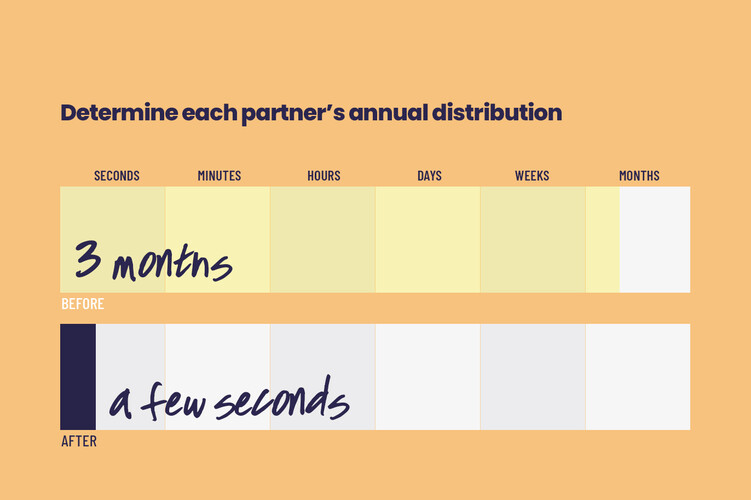
Fisher Brothers is busy readying other data sources in the data warehouse beyond the initial set of loan and cleaning operations data. In the future, Fisher GPT, built using Open AI’s GPT-5, will analyze previously siloed information and quickly provide answers that used to take several months to get manually, such as each partner’s expected distributions for the year.

“It will allow us to ask better questions about our data and just get much faster answers,” Hinchey says.

Click the banner below to assess which AI use cases will yield the best business outcomes.


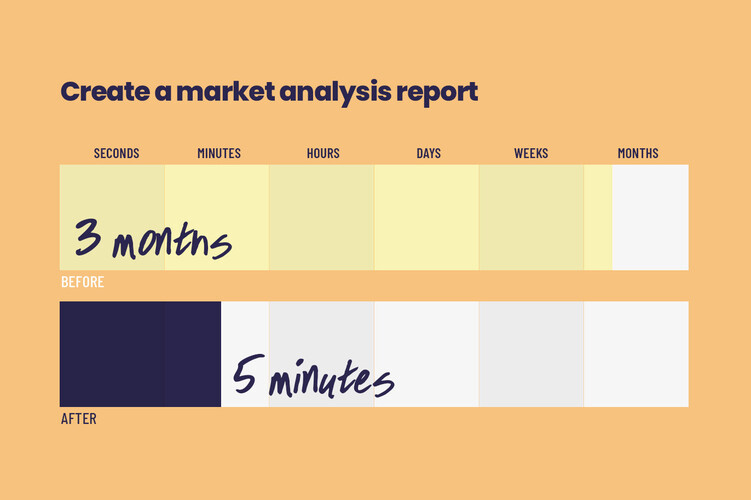
Since Fisher GPT is still in development with limited data availability, the company uses commercial generative AI tools when needed. When a partner asked the finance team to analyze whether the company should convert a multifamily residential building into condos, Hinchey was assisted by using tools such as ChatGPT and Perplexity to produce a comprehensive report in five minutes. He used enterprise licenses to protect corporate data.  

“When I put it in front of the financial team, they were like, ‘Wow! This would have taken me three months to figure out. And the data in here is accurate,’” Hinchey says. Initial skepticism of AI has given way to enthusiasm companywide, he says: “Now I can have a conversation with them that I couldn’t have before. And they get it. They understand, and through that, they’re accelerating these projects. We will run circles around our competition because we will be able to transact so much faster.”    

LEARN: How to secure agentic AI at scale.

Fair Trade USA Streamlines Operations With AI

Fair Trade USA, an Oakland, Calif.-based organization that certifies ethically and sustainably sourced products, from coffee in Ethiopia to fish in Indonesia, has turned to AWS to consolidate, clean and manage its data to fuel business intelligence and AI efforts.

The goal for the small organization is to operate more efficiently so staff members can spend less time on manual administrative work and more time on their core mission: connecting corporate buyers with producers while ensuring fair pay, safe working conditions and generating community development funds. 

“We’re working to unify and standardize data collection and create a single source of truth for business intelligence,” says Olena Gomozova, Fair Trade USA’s director of engineering and data analytics. “This enables our business leaders to make decisions and understand the impact of the program.”  

Demand for real-time data from external partners is also driving the initiative, she says.

With assistance from AWS, Fair Trade USA built its Insights Hub in 2024, a self-service analytics platform that uses AWS Redshift for data warehousing, Amazon S3 for storage and AWS Glue for data pipelines that clean and transform data for business intelligence. AWS Translate converts multilingual information into English.  

Olena Gomozova
We’re trying to unify and standardize data collection and have a central source of truth for business intelligence.”

Olena Gomozova Director of Engineering and Data Analytics, Fair Trade USA

“We started simple, bringing in customer relationship management data, then self-reported data from partners and producers, then audit data,” Gomozova says, adding that some data existed as Excel spreadsheets. “We’re adding data sources like Lego blocks.”  

The organization implemented coffee as its first product category in 2025. Staff and partners can access insights, including volumes of Fair Trade products purchased, compliance data and community development investments in educational, environmental, health and safety projects.  

Partners can also view supply chain maps to trace where their ingredients originated. Staff view data through an analytics tool, while partners use a portal. 

“Manual reporting used to take months,” says Gomozova. “Once dataflows and dashboards are configured, it takes minutes.”

Beyond analytics, Fair Trade USA has begun using Amazon Bedrock, a managed service for building and managing AI apps, to take advantage of generative AI.

Overall, managing the project in the cloud enables the small organization to innovate and operate more efficiently, Gomozova says.  

“It’s so easy to experiment. We can spin up additional environments and play with them, then shut them down the next day,” she says. “It lets us move faster, experiment faster, fail faster, recover faster.” 

Matt Carr
Close

New Research from CDW on Workplace Friction

Learn how IT leaders are working to build a frictionless enterprise.