

Feb 16 2026
Networking

Why Observability Tools Are Crucial for Resilience

Seeing problems as they’re happening — or before they begin — can help businesses avoid outages and optimize performance.

The problem that Justin Diana needed to solve had everything to do with accountability.

As vice president of IT at Corevist, Diana pulls the levers on the company’s main asset, a B2B e-commerce platform built specifically for manufacturers that use SAP enterprise resource planning software. The cloud-based solution integrates with their customers’ systems to provide live order tracking and real-time visibility into everything from inventory to product pricing.

“It’s a portal that’s sandwiched between the manufacturer’s network and the networks of the companies they’re doing business with,” he explains. “They log in to the portal to see either side and get access to the data relevant to their transactions.”

Click the banner below to discover how other world-renowned organizations managed IT change. 


Accountability is important because Corevist’s customers can’t do business without the company’s technology. “If we’re down, or their data is compromised, or they’re not receiving their notifications and order confirmations, that manufacturer could lose millions of dollars,” Diana says. His challenge involved ensuring his company could deliver on its promise, no matter what. “We had all of these individual tools for monitoring the performance and reliability of our system,” he says. “But what we really needed was a centralized solution — a platform with everything in one place.”

Corevist didn’t have to go far for its answer. With its IT management and network monitoring software all provided by SolarWinds, the company simply turned to the vendor’s newest offering, SolarWinds Observability. The solution, Diana explains, automatically feeds visibility functionality into a single database. “Now you can look at your system holistically with all of the important pieces on the same screen,” he says.

SUBSCRIBE: Get the latest IT news from BizTech Magazine delivered to your inbox.

Not long ago, a Corevist customer reached out to complain that it was taking too long to log in to the company’s portal. Hoping for a quick resolution, Diana turned to his observability tools to try to identify the underlying issue. He went into the SolarWinds platform and pulled up the customer’s history, and it was immediately clear that the delay was due to a data retrieval problem.

“Had we not had that holistic view of our entire infrastructure, it would have taken us days to chase the issue down because it was buried so deep and out of the normal troubleshooting pathway,” Diana recalls. Instead, Corevist managed to fix the problem in less than 30 minutes, “and the customer was back in the system and quickly back to doing business.”
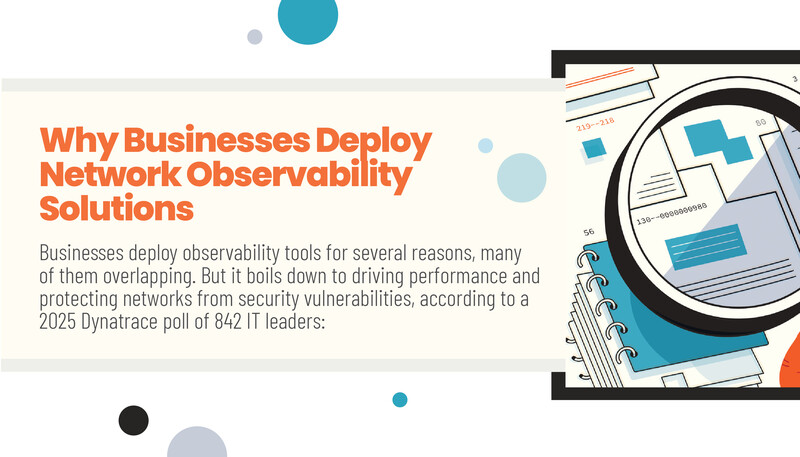
Network Observability Is a Business Imperative

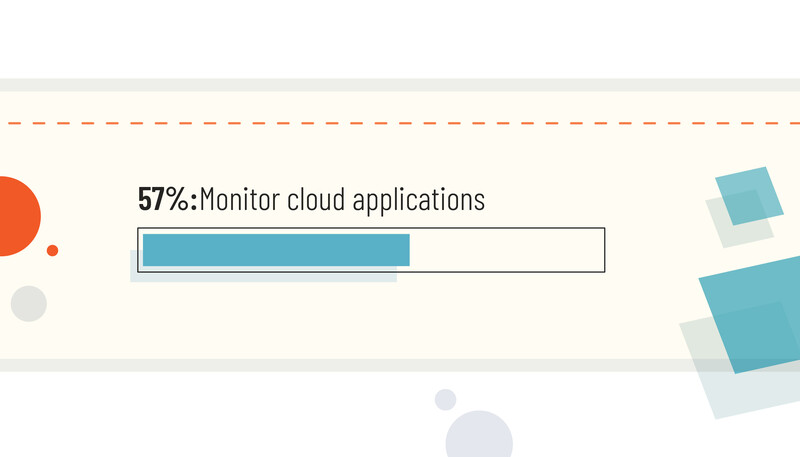
For a growing number of businesses, observability has become an unsung hero helping them to maintain resiliency.

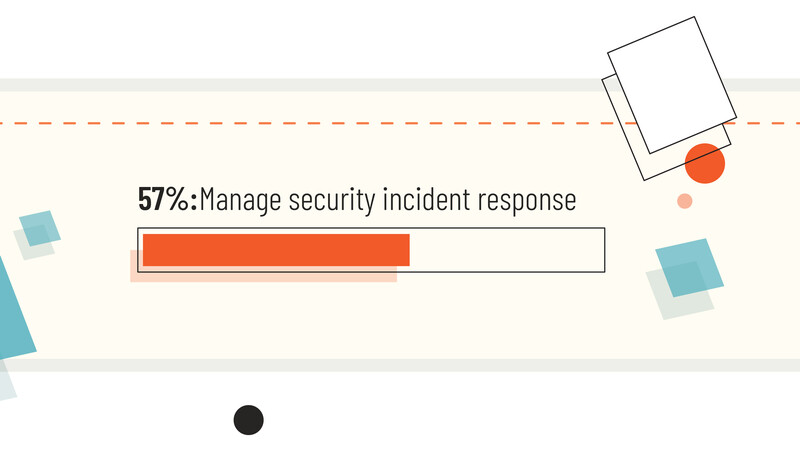
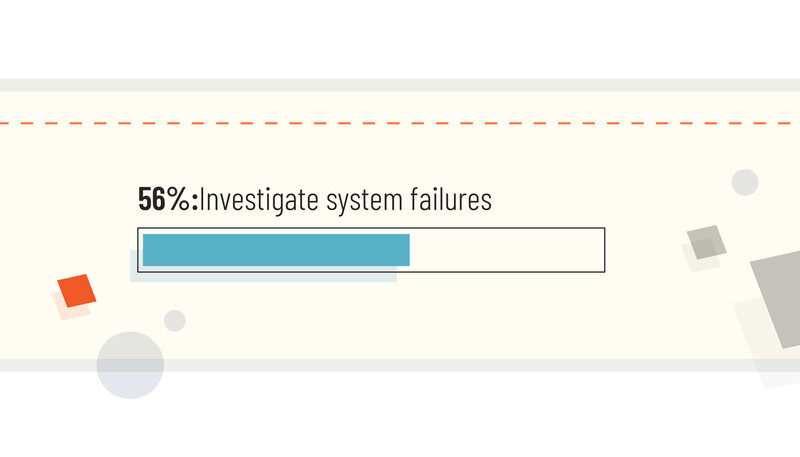
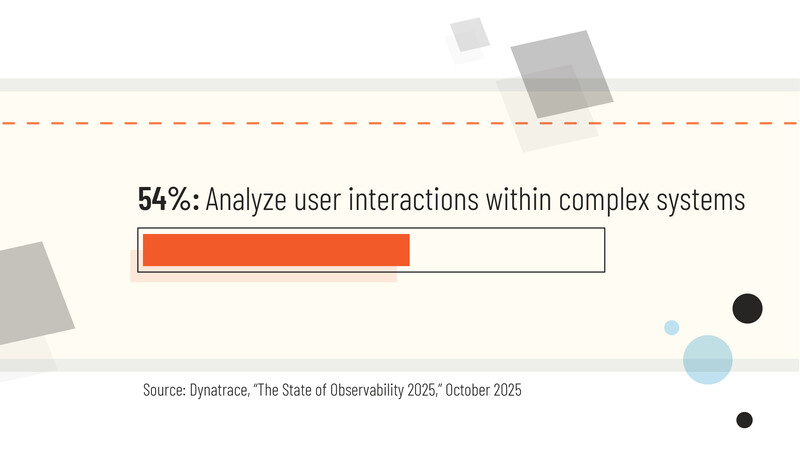
On the security front, observability technology enables organizations to detect, analyze and respond to threats in real time, reducing the severity and duration of breaches. And when it comes to performance, it is key to identifying and resolving problems before they can slow down operations or negatively impact customer interactions, says Mark Leary, research director for network analytics and automation at IDC.

“The way we’ve traditionally thought about network monitoring and visibility, it’s taking a very siloed view of certain devices within the network to understand how they’re performing,” Leary says. “Observability takes the next step and offers a much broader perspective, which is a view of the entire network at once, plus the applications the network is serving.”

The latest observability platforms don’t simply present data to the IT professionals tasked with network management. Instead, he notes, these systems use artificial intelligence to learn from the data they’re “observing” to make recommendations or take action on their own.

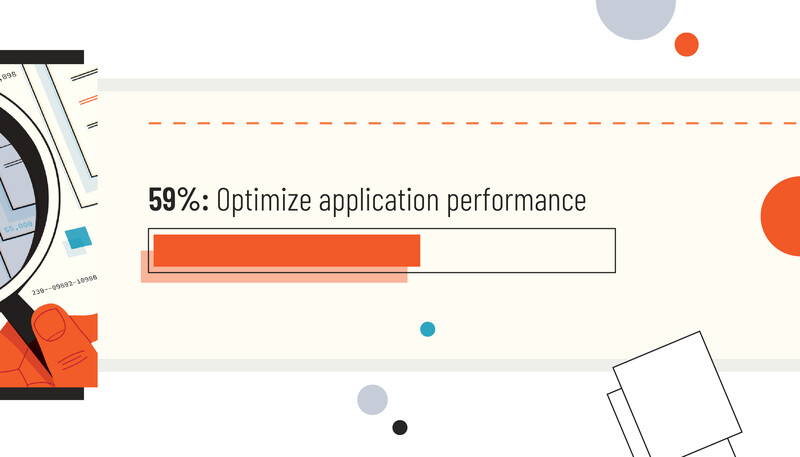
75%

The share of organizations that expect their observability budgets to increase in 2026

Source: Dynatrace, “The State of Observability 2025,” October 2025

“Observability solutions are getting smarter all the time, and that’s been a welcome development for a lot of businesses,” Leary says. He points to the pressures many companies face to keep pace with rapidly increasing network complexity: “They’re short on staff and they’re often short on the skill sets they need. With AI and automation, they have a way to fill in those gaps.”

Among the companies that have recently shared their own observability success stories are Rent the Runway and United Airlines, which are leveraging AI-driven solutions from Splunk. ADT, a home and business security company, has used Dynatrace to understand the behavior of its systems, while the Kroger grocery chain has turned to the same observability tools to optimize its supermarket operations.

At Corevist, Diana says, its observability platform has been a win for the company because it deployed it for “the right reasons.” The IT team didn’t start with the system and then go looking for problems to solve, but instead, “we knew what our problems were at the beginning, and we saw how observability could help.”

Corevist’s success depends on its ability to honor its service-level agreements with its customers, and its new observability capabilities have made that easier than ever, Diana notes. “We’ve never once failed to maintain our contractual SLAs since we implemented this new approach,” he says. “For me, that’s the most important thing: making sure that our clients get the return on investment that they expect.”

FIND OUT: Why identity and access management can simplify data privacy and compliance.

Agero Uses Observability To Keep Systems Reliable

Maximizing ROI for his company’s customers is also a priority for Billy Macdonald, senior director of DevOps at Agero. The Massachusetts-based roadside assistance company relies on its custom Swoop dispatching software to provide rapid support to more than 33,000 drivers each day. When cars break down anywhere in the country, Agero’s network of towing and roadside service providers are often the first to respond.

“It’s stressful to be on the side of the road wondering when help is going to arrive,” Macdonald notes. “Observability is important because we’re providing this critical service that really depends on the performance of our systems.”

Agero uses a Software as a Service platform from Datadog that integrates with the company’s code base to collect and present data on real-time system operations. Its Watchdog engine leverages AI to learn what normal behavior looks like, and if anything deviates from that learned baseline, it flags and analyzes the anomalies automatically.

Click the banner below to see how identity and access management can ensure seamless security.


“It correlates traces, metrics and logs, and presents them as alerts we can see on dashboards and monitors,” Macdonald explains. “Our roadside assistance platform, our accident management platform, our business platforms we use to run the company: With observability, we can ensure they’re operating within the boundaries that we expect.”

Not long ago, when a major cloud services provider experienced a temporary outage, the Datadog solution detected the problem in time for Agero to adapt its systems. “The platform identified the internal services that were impacted, and fortunately, we had a plan in place that allowed us to take action and reroute traffic,” Macdonald says.

It is such scenarios that illustrate just how valuable observability solutions can be, he adds: “There are a lot of options out there now from a lot of different vendors, but what I always say is that any platform is preferable to not having any at all.”

In Agero’s case, Datadog was deployed only after all key stakeholders were on board with the investment and understood what the solution had to offer. That included Macdonald’s engineering colleagues in DevOps as well as the company’s senior leadership. “As a team, we all agreed that observability is critical,” he says. “It’s better for us and better for our customers, and it ultimately makes us a better company.”

Harry Campbell/Theispot
Close

New Workspace Modernization Research from CDW

See how IT leaders are tackling workspace modernization opportunities and challenges.